Pastel de Nata or Pastel de Belém? What you need to know.
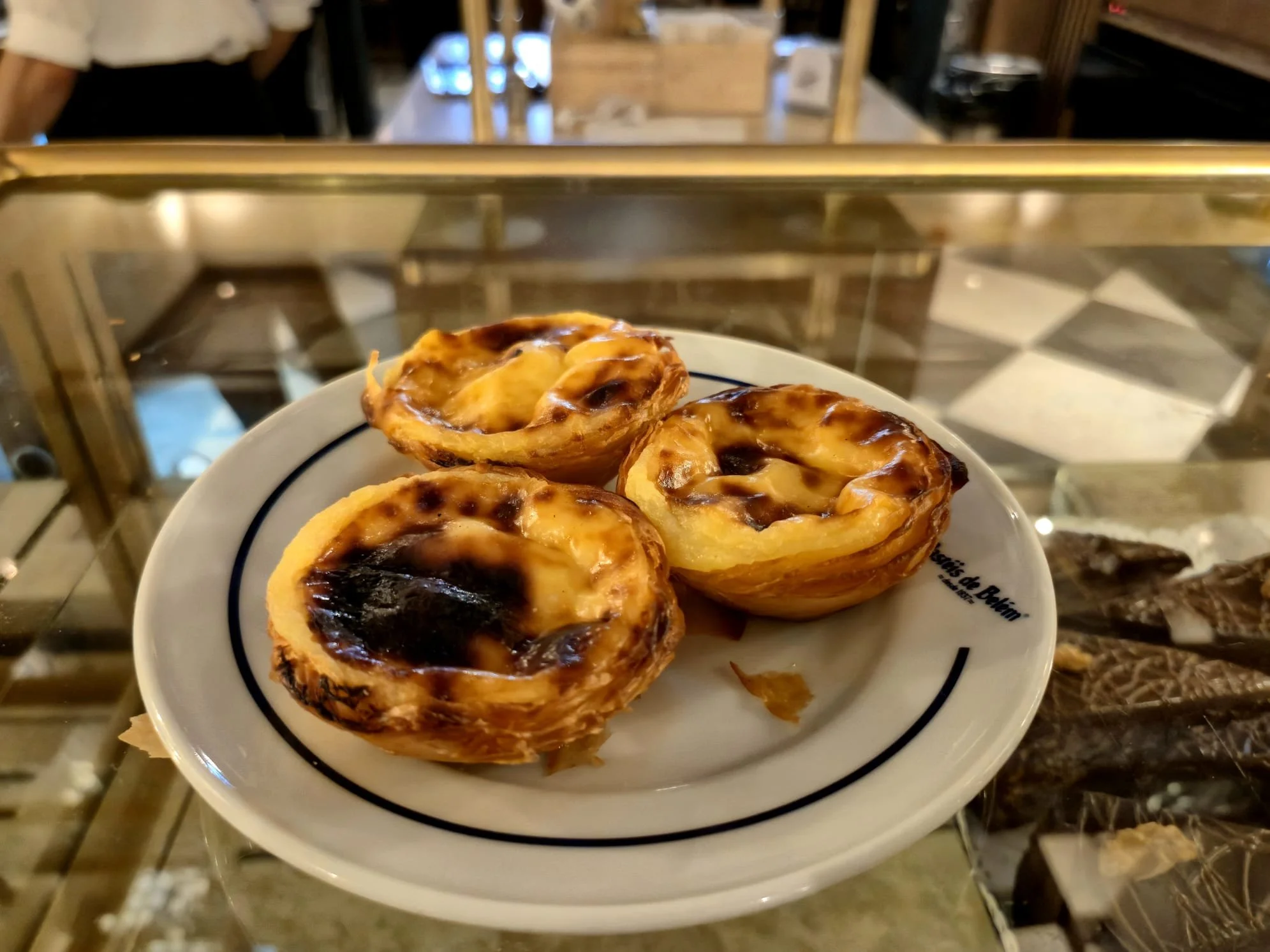
Have we been calling Portugal's most famous pastry by the wrong name?
Every day, thousands of visitors come to Portugal in search of the famous Pastel de Nata. But few know that the original version has a different name altogether. In this article we will find out more about Portugal's first custard tart - the Pastel de Belém. So what's the difference between a Pastel de Nata and a Pastel de Belém? And why do some Portuguese insist they're not the same thing?
The answer takes us back nearly 200 years, to a secret recipe, a monastery, and one of Portugal's most delicious legends.
Originally, the recipe was created before the 18th century by Catholic monks at the Jerónimos Monastery in the civil parish of Belém, Lisbon. At the time, large quantities of egg-whites were used in convents and monasteries by nuns and monks for starching clothes, a practice used to achieve crisp, professional lines, uphold a uniform standard of modesty and protect their garments. It acted as a protective barrier; dirt and sweat adhered to the starch rather than the clothing fabric and it was easily washed away during laundering. As a result of this practice - there were many leftover egg yolks, later used to make cakes and pastries.
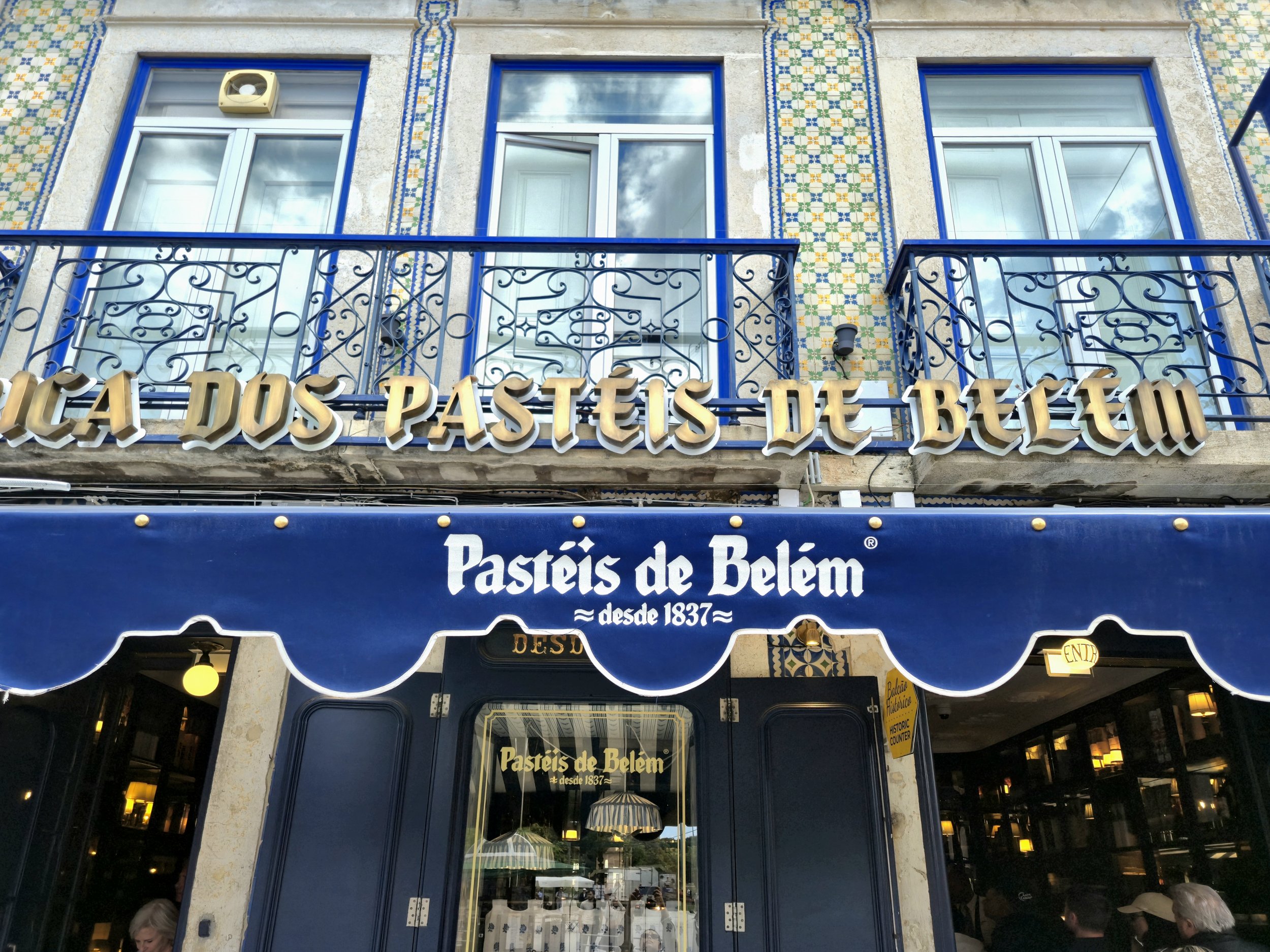
If we fast-forward to the Liberal Revolution of 1820, following the dissolution of the religious orders and in the face of impending closure of many monasteries and convents, monks started selling pastéis at a nearby sugar refinery to bring in revenue. However, in 1834,the monastery was closed and the recipe sold. More specifically, to a sugar refinery whose owners opened the Fábrica de Pastéis de Belém in 1837.
The baking of the Pastéis de Belém began in the buildings attached to the refinery following the ancient secret recipe that remains unchanged to the present day.
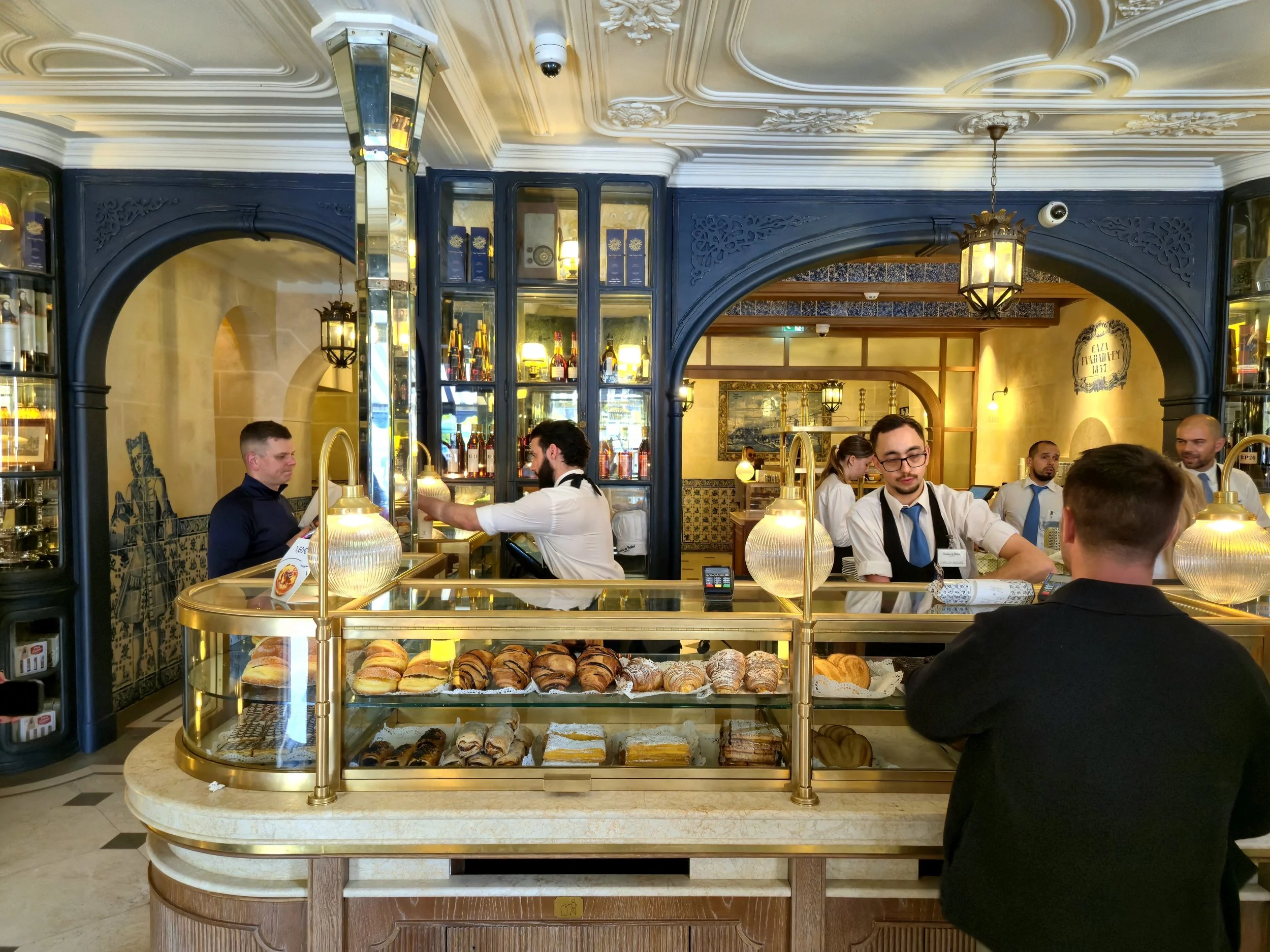
When visiting Lisbon, take your time to hop on a train and visit the original Pastéis de Belém, located just a three-minute short walk from the Jerónimos Monastery - where it all started. Beware of the big queues! If you want to sit inside, you can skip the long street queue (that one is just for takeaway). Go straight inside and bypass the line and head directly through the front door for table service.
So, have we been calling Portugal's most famous pastry by the wrong name? Not quite. "Pastel de Nata" is the correct name for the custard tarts enjoyed throughout Portugal and beyond. However, what many people don't realize is that the original version—the one that started it all—is the Pastel de Belém. While every Pastel de Belém is a Pastel de Nata, not every Pastel de Nata is a Pastel de Belém. It's a small distinction, but one that tells a fascinating story of tradition, history, and a secret recipe that has been preserved for nearly two centuries. And if you find yourself in Lisbon, there's no better place to taste that history than where it all began.